

The United States is notorious for having fifty states, represented by stars in our national flag.
Videos by TravelAwaits
In reality, the US has a much broader reach. You can find unincorporated US territories dotting the globe, from the Caribbean to the Pacific Ocean.
These territories aren’t quite like the other US states. They’re either incorporated or unincorporated, terms used to signify the degree of involvement from the federal government. But they’re never sovereign.
All 50 states and all tribal reservations are sovereign, by contrast. US states have their own constitutions and pass their own laws, which might be distinct from federal rulings. Reservations, on the other hand, are free from following state laws—but must abide by federal laws instead.
US unincorporated territories: how are the islands organized?
Beyond the bounds of the continental US, unincorporated territories aren’t treated quite the same. Places like Puerto Rico, American Samoa, Guam, and the US Virgin Islands are either partly or fully ‘organized’ by the federal government.
In Puerto Rico, notably, citizens pay US taxes and receive US passports as a commonwealth state—even though they aren’t allowed to vote, just like those in Washington DC.
Meanwhile, in American Samoa, locals are US nationals—not citizens. They don’t pay income tax on any earnings (made on the island, at least).
Let’s zoom out a bit to refocus on the more fun part of this strange geopolitical setup: travel. These islands are great for first-time travelers who might be nervous about totally leaving the US behind.
Here’s how to explore American territories around the world.

Puerto Rico
Known for its beautiful sunrises, jungle-covered hills, and penchant for cock fighting, this Caribbean island is a top contender for many tourists.
In fact, it’s a heavily traveled area for Americans looking for an island adventure. Not only can you use the dollar, but many people also speak English.
I won’t go into detail here, as there are plenty of guides that allow you to take on Puerto Rico at your own pace and according to your own interests. Just know this: it’s a deceptively large island that you probably won’t be able to fit into a single trip.

American Samoa
With its tropical climate and highly remote location, a trip to American Samoa is one of a lifetime.
While most people dream of visiting an island like Oahu or Maui, American Samoa and neighboring islands like Vanuatu and Tonga are even more rugged, stunning, and untouched.
American Samoa is made up of seven islands, most of which are open to visitors. I’d recommend sticking to the lush national parks where you can hike through jungles and then lounge on the beach. You’ll find stunning coral to explore underwater, along with rainforests and waterfalls.
You can also explore Samoan culture while you’re around, including touring villages, watching traditional dances, and cooking classes.
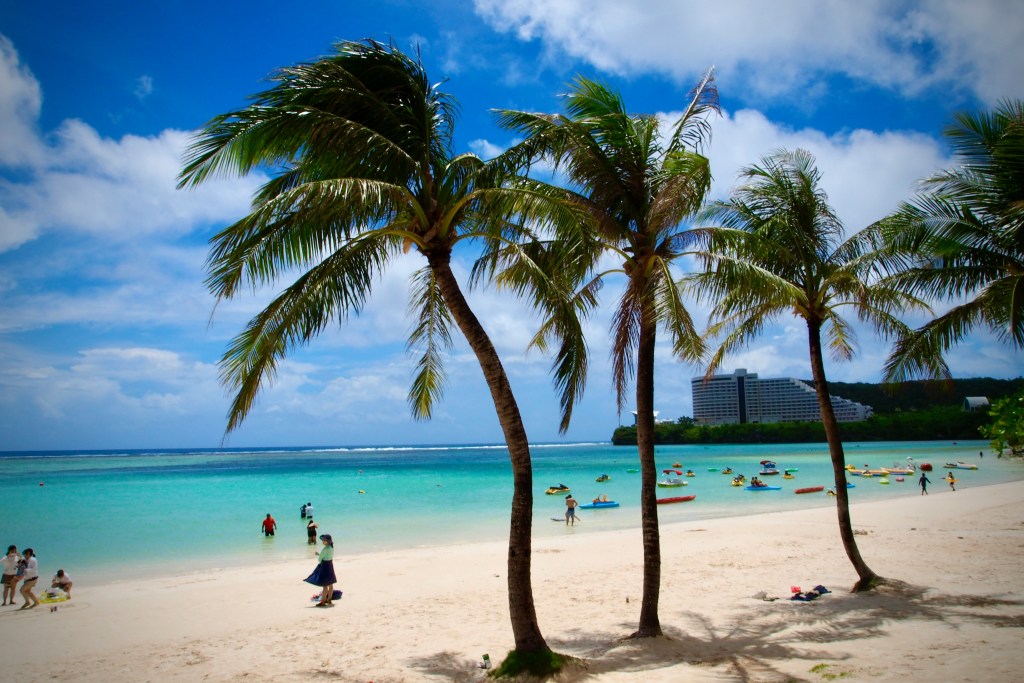
Guam
Guam is a small island between Japan and the Northern Mariana Islands (which are also a notable American territory). The US has two large military bases on Guam, including Air Force and Naval bases, which is how most citizens end up visiting the island.
But Guam has slowly become a tourist destination.
The climate is tropical, which means there are plenty of picturesque beaches to lounge on. It’s also a unique cultural center. Guam is home to native Chamorro people, who have worked hard to preserve their traditions.
In fact, you can find tourists from all across Asia crisscrossing the island to enjoy its many offerings. Most are there for the beaches and natural splendor, but many also explore cultural museums that highlight Guam’s unique Chamorro identity.
But Guam has also been occupied in the last century by the Japanese, Spanish, and (most recently) the US. That means you can enjoy the cultural remnants of many cultures, including their cuisines, architecture, and more.

US Virgin Islands
Similiar to Puerto Rico, you’re likely familiar with the US Virgin Islands. Though this territory is made up of dozens of minor islands and reefs, the main destinations are St. Croix, St. John, and St. Thomas.
Tourists of all stripes head to the islands during the spring and autumn seasons. Given its proximity to the US, it’s a top choice for vacationers of all stripes. You’ll find cheap resort deals along with more extravagant offers.
But the vast majority of visitors will find their way to the US Virgin Islands via cruises and private yacht tours.
In fact, if you’ve been dreaming about a luxury cruise or a private charter, St. Thomas is a great place to set sail from. Usually, tours leaving from St. Thomas head toward the British Virgin Islands, which are located nearby to the east.
Here’s a rewritten version of the content while retaining the original HTML tags:
The United States is well-known for comprising fifty states, each represented by a star on our national flag.
Videos by TravelAwaits
However, the US extends far beyond its mainland borders. Unincorporated US territories can be found across the globe, spanning from the Caribbean to the Pacific.
These territories differ from the states. They may be classified as incorporated or unincorporated, indicating the level of federal government oversight. Nonetheless, they lack sovereignty.
In contrast, all 50 states and tribal reservations hold sovereignty. Each state operates under its own constitution and can enact laws that may diverge from federal regulations. Reservations, while exempt from state laws, are still subject to federal statutes.
US unincorporated territories: how are the islands organized?
Outside the continental US, unincorporated territories are not treated identically. Places such as Puerto Rico, American Samoa, Guam, and the US Virgin Islands have varying levels of organization by the federal government.
In Puerto Rico, for example, residents pay US taxes and are issued US passports, but, like citizens of Washington DC, they cannot vote.
Conversely, individuals in American Samoa are US nationals rather than citizens and are exempt from income tax on earnings generated on the island.
Let’s broaden our focus to the more enjoyable aspect of this unusual geopolitical situation: travel. These islands are perfect for first-time travelers hesitant to fully depart from the US.
Here’s your guide to exploring American territories around the world.
Puerto Rico
This Caribbean island is cherished for its stunning sunrises, lush hills, and reputation for cockfighting, making it a favorite among tourists.
Indeed, it’s a popular destination for Americans seeking an island getaway. You can use the dollar for transactions, and English is widely spoken.
I won’t delve into specifics here, as there are numerous guides that let you explore Puerto Rico at your own pace and preferences. Just remember: it’s a surprisingly expansive island that likely won’t fit entirely into one visit.
American Samoa
With its tropical weather and remote setting, visiting American Samoa is truly a unique experience.
While many people aspire to see islands like Oahu or Maui, American Samoa, along with nearby islands such as Vanuatu and Tonga, offers a more rugged, breathtaking, and untouched beauty.
American Samoa consists of seven islands, most of which welcome visitors. I suggest focusing on the thriving national parks where you can trek through jungles and relax on beautiful beaches. Stunning coral reefs await exploration underwater, alongside breathtaking rainforests and waterfalls.
Additionally, you can immerse yourself in Samoan culture through village tours, traditional dance performances, and cooking classes.
Guam
Guam, located between Japan and the Northern Mariana Islands (another significant American territory), is a small island. The US maintains substantial military bases here, which attract many visitors.
However, Guam is gradually emerging as a popular tourist spot.
With a tropical climate, it boasts beautiful beaches perfect for relaxation. It also serves as a unique cultural hub, home to the native Chamorro people dedicated to preserving their heritage.
Tourists from across Asia frequent the island, drawn by its vast natural and cultural offerings. Many flock to its pristine beaches, while others explore cultural museums reflecting Guam’s distinctive Chamorro heritage.
Guam’s history has seen it influenced by various cultures, including Japanese, Spanish, and most recently, American, allowing visitors to experience a blend of cuisines, architecture, and more.
US Virgin Islands
Similar to Puerto Rico, the US Virgin Islands may ring a bell for many. This territory comprises numerous smaller islands and reefs, with St. Croix, St. John, and St. Thomas being the most popular destinations.
Visitors flock to these islands, especially during the spring and fall seasons. Due to their proximity to the US, they remain a favored destination for all types of travelers, offering a range of resort options from budget to luxury.
Most guests arrive in the US Virgin Islands via cruises or private yacht excursions.
If you’ve been dreaming of either a lavish cruise or a private charter, St. Thomas is an ideal launching point. Typically, excursions from St. Thomas head towards the nearby British Virgin Islands.
Introduction
This section introduces the topic at hand. Discuss its relevance and importance, providing some background information to set the stage for the details that follow.
Section 1: Overview
In this section, delve deeper into the main theme of the article. Describe fundamental concepts, definitions, and any necessary context that would aid in understanding the topic thoroughly.
Section 2: Historical Context
Discuss the history and evolution of the subject matter. Include notable milestones and figures that have shaped its development over the years.
Section 3: Current Trends and Developments
Explore the latest trends or changes occurring in this field. This might involve new research findings, innovations, or shifts in popular opinion.
Section 4: Implications and Applications
Highlight how this topic affects various sectors or fields. Discuss its practical applications and implications in real-world scenarios.
Section 5: Challenges and Controversies
Present any significant challenges, debates, or controversies associated with the topic. Discuss various viewpoints and the nuances involved in each position.
Conclusion
Summarize the key points discussed throughout the article. Reinforce the importance of the topic and consider future directions or developments that may emerge.
Frequently Asked Questions (FAQs)
FAQ 1: What is [specific question about the topic]?
Provide a concise answer to this question, offering clarity and relevance to the overall discussion.
FAQ 2: How does [another relevant question] impact the industry?
Address this query in depth, explaining the implications and significance within the context of the topic.
FAQ 3: Where can I learn more about [topic]?
Offer resources or recommendations for further reading or research.
FAQ 4: Are there any recent studies on [topic]?
Discuss any important studies, including their findings and relevance.
